


 Deutsch
 English
 Español
 Français
 Nederlands
 Português


 Share
Share




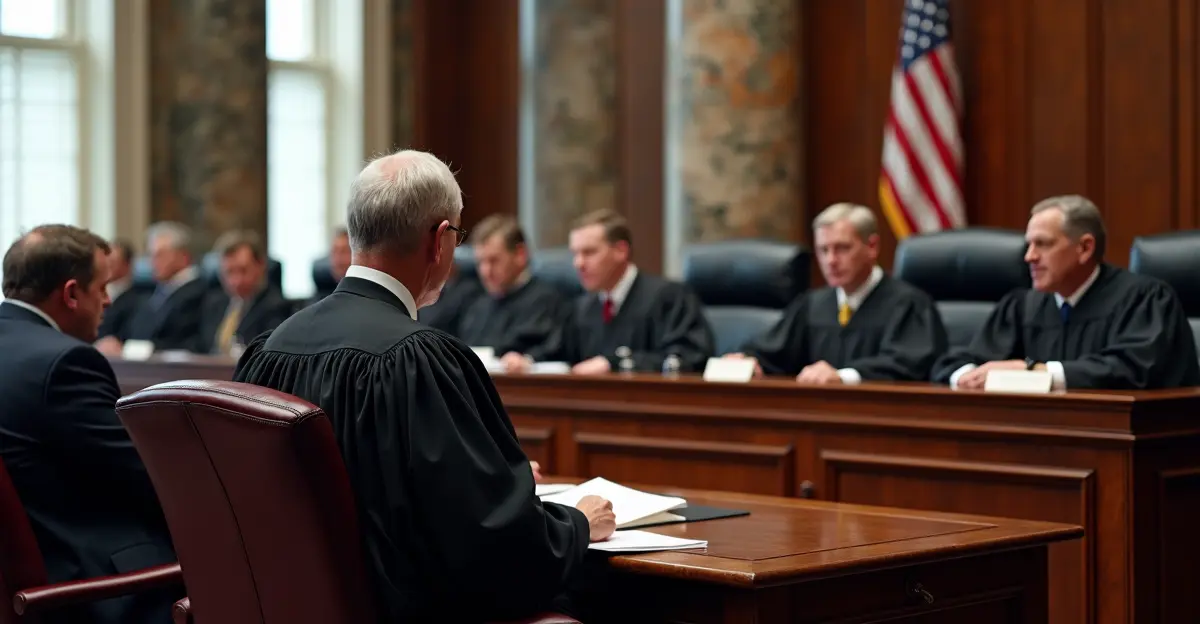
In a landmark 6-3 decision, the U.S. Supreme Court struck down the president's authority to impose sweeping tariffs under the International Emergency Economic Powers Act (IEEPA), invalidating the legal foundation of the 'Liberation Day' tariffs and triggering refund claims potentially exceeding $200 billion. The February 20, 2026 ruling in Learning Resources, Inc. v. Trump and Trump v. V.O.S. Selections, Inc. represents the most consequential judicial intervention in U.S. trade policy in decades, fundamentally reconfiguring the architecture of global trade.
Background: The Rise and Fall of IEEPA Tariffs
On April 2, 2025—dubbed 'Liberation Day'—President Donald Trump invoked IEEPA to declare a national emergency over the U.S. trade deficit and imposed a 10% baseline tariff on nearly all imports, with country-specific rates ranging from 11% to 50% for major trading partners. These duties stacked on top of existing IEEPA 'fentanyl' tariffs on China that had been in effect since February 2025, and earlier levies on Canada and Mexico from March 2025. By January 2026, IEEPA-based tariffs had generated an estimated $164.7 billion in customs revenue, representing roughly 52% of total U.S. customs duties and averaging approximately $500 million per day, according to the Penn Wharton Budget Model analysis.
The Supreme Court's Reasoning
Chief Justice John Roberts, writing for the majority—joined by Justices Sotomayor, Kagan, Gorsuch, Barrett, and Jackson—held that IEEPA does not authorize the president to impose tariffs. The opinion emphasized that the Constitution's Tariff Clause reserves the power to levy duties to Congress, and that if Congress intended to grant such sweeping tariff authority under IEEPA, 'it would have done so expressly, as it has in other statutes.' The majority focused on the fact that imposing tariffs is not among the enumerated actions IEEPA authorizes the president to take, such as blocking transactions or freezing assets.
Justice Brett Kavanaugh penned the principal dissent, joined by Justices Clarence Thomas and Samuel Alito, arguing that the tariffs were 'clearly lawful' under IEEPA's text, history, and precedent. Kavanaugh warned that returning billions in already-collected tariffs would create 'a mess,' while Thomas separately contended that neither IEEPA's text nor the Constitution supports the majority's conclusion. President Trump subsequently called the ruling 'deeply disappointing' and said he was 'ashamed of certain members of the court.'
The Refund Avalanche: Over $200 Billion at Stake
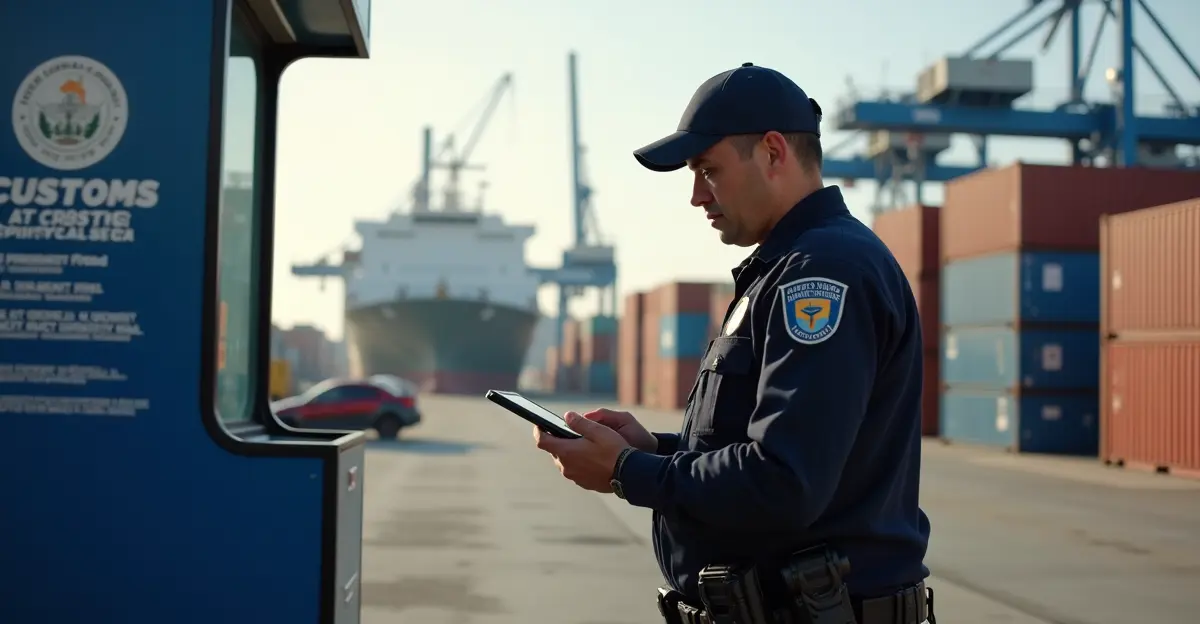
Although the Supreme Court did not explicitly order immediate refunds, the ruling that the tariffs were collected illegally opened the door to a wave of refund claims. The U.S. Court of International Trade subsequently ordered the return of duties to importers. Customs and Border Protection (CBP) launched the Consolidated Administration and Processing of Entries (CAPE) system in late April 2026 to process refunds. By July 2026, CBP had received over 252,000 refund declarations covering more than 25 million import entries, with approximately $129 billion in potential and certified refunds accepted and roughly $100 billion already disbursed. Analysts at the Penn Wharton Budget Model project total refunds could reach $175 billion, while a class-action lawsuit by importer Freestyle World continues for the remaining claims.
The New Trade Architecture: From Emergency Orders to Statute-Based Pathways
The ruling forces a fundamental shift in U.S. trade policy from emergency executive orders to statute-based pathways. Within days of the decision, the administration pivoted to Section 122 of the Trade Act of 1974, invoked for the first time in history, imposing a 10-15% emergency surcharge on deficit trade flows (expiring July 24, 2026). Meanwhile, Section 232 duties on steel, aluminum, copper, and autos remain active at 25-50%, and Section 301 China tariffs covering approximately $370 billion in goods continue at rates of 7.5-100%. The result is a more fragmented but legally durable tariff landscape, with a weighted average tariff rate of approximately 14.8%.
Supply Chain Restructuring and Global Implications
The IEEPA tariffs triggered the largest wave of supply chain restructuring since the Section 301 tariffs of 2018-2019. Companies that had spent decades building manufacturing relationships in China suddenly faced combined tariff loads exceeding 60% in some categories. Many responded by nearshoring production to Mexico, Vietnam, India, and other countries outside the scope of the highest duties. Southeast Asian hubs have emerged as primary beneficiaries, capturing diverted trade and foreign direct investment projected to exceed $100 billion by 2028. U.S.-China bilateral trade has fallen roughly 30%, while European buyers pivot to Mediterranean nearshoring partners such as Turkey and Morocco. The ruling also carries significant implications for the WTO reform agenda, as the invalidation of unilateral emergency tariffs may revitalize multilateral trade negotiations.
Expert Perspectives
'This decision represents the most significant judicial constraint on presidential trade authority since the Youngstown Steel Seizure case,' said trade law professor Margaret Chen of Georgetown University Law Center. 'It reaffirms that tariff power belongs to Congress, not the executive, even during declared emergencies.' Trade economist David Rosenberg of the Peterson Institute noted: 'The asymmetric impact on China exposure means companies must now navigate a patchwork of statutory authorities rather than a single emergency framework. That complexity itself becomes a barrier to trade.'
FAQ
What did the Supreme Court rule on IEEPA tariffs?
The Supreme Court ruled 6-3 that the International Emergency Economic Powers Act does not grant the president authority to impose tariffs. The decision invalidated the 'Liberation Day' tariffs and other IEEPA-based duties that had generated approximately $164.7 billion in customs revenue.
How can importers claim refunds for IEEPA tariffs?
Importers can file refund claims through CBP's CAPE system in the ACE Portal. Claims must generally be filed within 180 days after goods are 'liquidated.' The system has processed over 252,000 declarations covering more than 25 million import entries.
What alternative tariff authorities is the administration using now?
The administration has pivoted to Section 122 of the Trade Act of 1974 (temporary emergency surcharges), Section 232 (national security tariffs on steel, aluminum, copper, autos), and Section 301 (China-specific duties). These statutory pathways provide a more legally durable framework.
How does the ruling affect global supply chains?
The ruling accelerates nearshoring trends, with companies diversifying away from China toward Mexico, Vietnam, India, and other Southeast Asian nations. Combined tariff loads on Chinese goods had exceeded 60% in some categories before the ruling, making supply chains uneconomical.
What are the implications for WTO reform?
The invalidation of unilateral emergency tariffs may revitalize multilateral trade negotiations by reinforcing the principle that tariff actions should follow established statutory and international frameworks rather than emergency executive orders.




Follow Discussion